What's new

New tools and ideas for your next creation.

Ezier

Audio Translator

Translate spoken audio into another language. Upload a recording, choose the target language, and download the translated audio. Free to try.

Audio translator

Translate spoken audio

Audio file

How to translate audio

Use audio translator when the message is right but the language is wrong. Upload a recording with speech, pick the language it should speak, and get translated audio back. The pipeline transcribes the speech, translates the text, then regenerates it as audio in the target language. When you only need the words on paper, use Audio to Text instead.

  1. 01

    Upload the recording

    Choose the audio file that contains the speech you want to translate.

  2. 02

    Choose the languages

    Keep automatic detection for the spoken language, or set it yourself — then pick the language the result should speak.

  3. 03

    Add context for the translation

    Add names, brands, or specialist terms so the translation keeps them intact. Optional.

  4. 04

    Translate and download

    Start the translation, preview the translated audio, then download the file.

Why use Ezier for audio translation

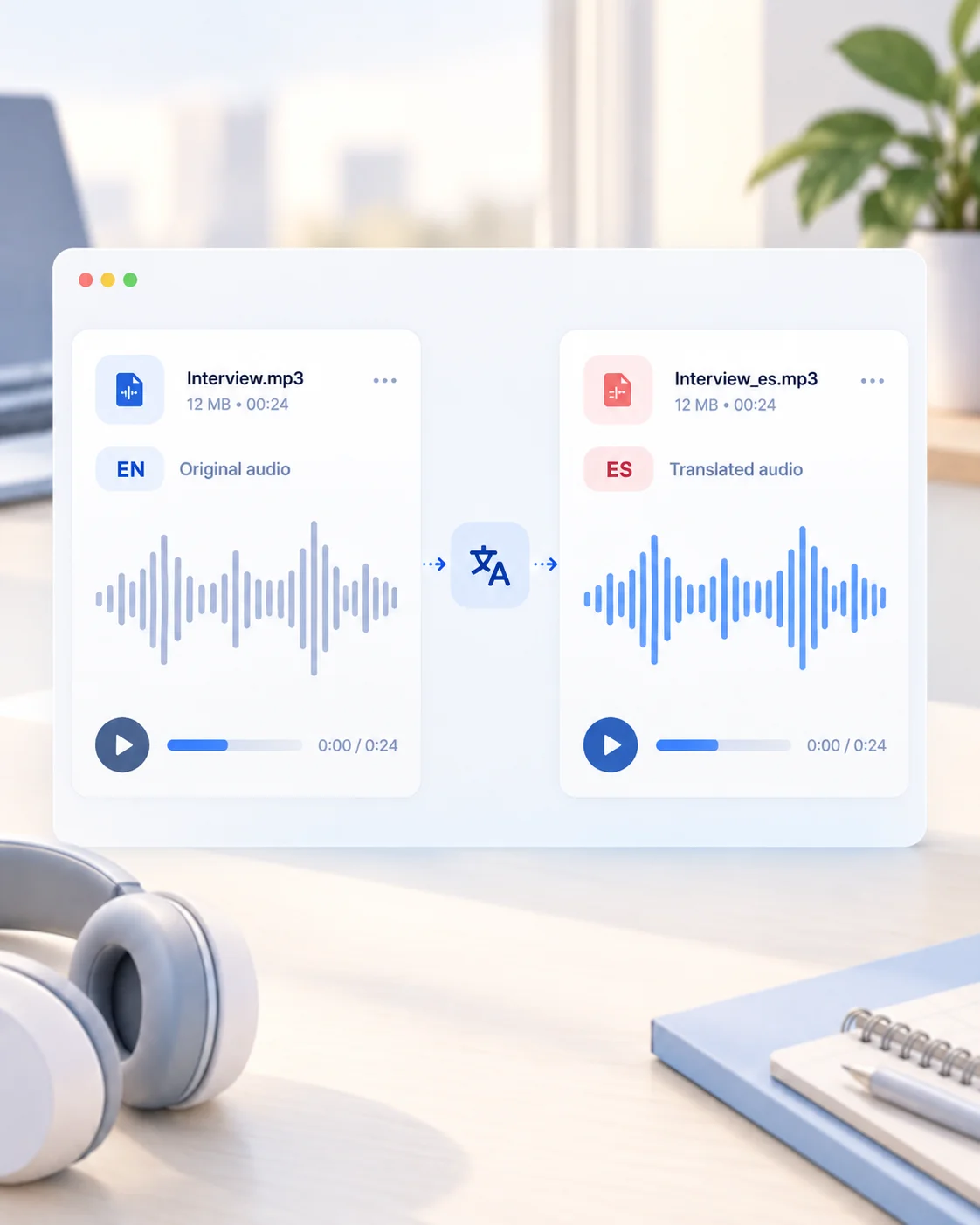
Upload a recording, pick the target language, and download translated audio from one workspace.

Audio translation interface converting an English recording into Spanish audio
  • Translated audio, not just text

    Get back a listenable audio file in the target language, ready to publish or share.

  • Automatic source detection

    The spoken language is detected for you; set it manually only when you want control.

  • Context-aware translation

    Add names and specialist terms before translating so they survive the language switch.

  • Connected audio workflows

    Transcribe first with Audio to Text, or convert the file format before and after translation.

Hear English originals with Spanish translations

Play each English recording, then compare it with the matching Spanish translation.

Product voiceover

English original

Product voiceover (EN)

0:00 / 0:00

Transcript

Meet Ezier, your all-in-one AI audio toolkit. Turn text into natural speech, create audio in seconds, and bring every idea to life with ease.

Spanish translation

Product voiceover (ES)

0:00 / 0:00

Transcript

Conoce Ezier, tu kit de herramientas de audio con IA todo en uno. Convierte texto en voz natural, crea audio en segundos y da vida a todas tus ideas con facilidad.
Lesson narration

English original

Lesson narration (EN)

0:00 / 0:00

Transcript

Welcome to this lesson from Ezier. In the next few minutes, you'll learn key concepts clearly and efficiently through AI-powered audio narration.

Spanish translation

Lesson narration (ES)

0:00 / 0:00

Transcript

Bienvenido a esta lección de Ezier. En los próximos minutos, aprenderás conceptos clave de forma clara y eficiente con narración de audio impulsada por IA.

Conversational update

English original

Conversational update (EN)

0:00 / 0:00

Transcript

Hey, have you tried Ezier yet? Just type your text, choose a voice, and let Ezier turn your words into natural-sounding audio in seconds.

Spanish translation

Conversational update (ES)

0:00 / 0:00

Transcript

Oye, ¿ya probaste Ezier? Solo escribe tu texto, elige una voz y deja que Ezier convierta tus palabras en audio de sonido natural en segundos.

Tips for a cleaner translation

Clear speech, correct language selection, and a short list of must-keep terms improve the translated audio.

Start with clean speech

Use the clearest recording available. Background music, noise, and overlapping speakers make both transcription and translation harder.

Name the terms that must survive

Add people, brands, and specialist vocabulary in the translation note so they are carried over instead of translated literally.

Check the translation before publishing

Review names, numbers, and any culturally specific phrasing in the translated audio before sharing it.

Split long recordings

Break long recordings into shorter segments before translating. Shorter clips are easier to review and less likely to drift in long passages.

Audio Translator FAQ

How does audio translation work?

The AI transcribes the speech in your recording, translates the text into the target language, then regenerates it as spoken audio you can preview and download.

What is the difference between audio translator and audio to text?

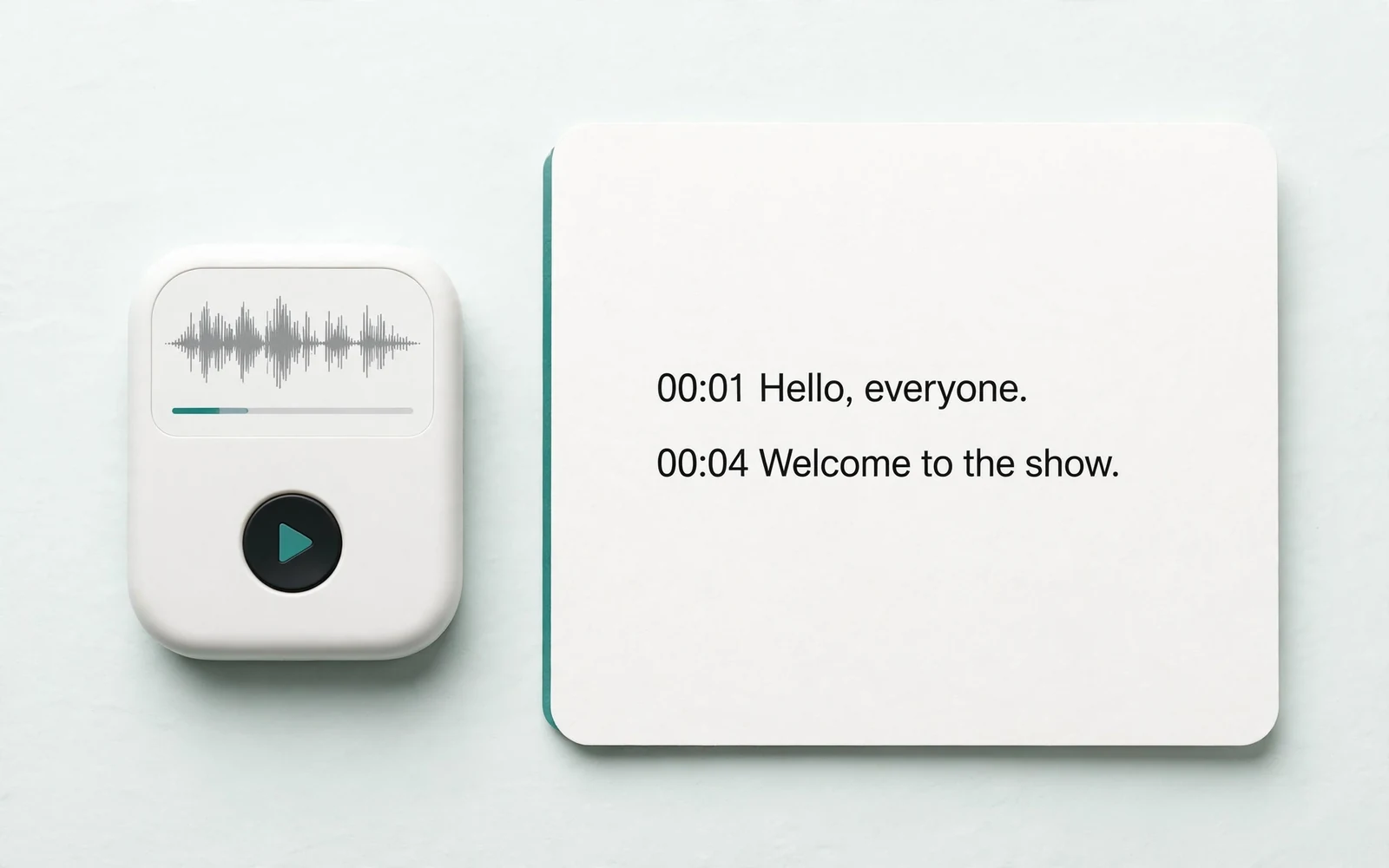
Audio to text returns the words as an editable transcript. Audio translator returns translated audio in another language.

Which languages can I translate between?

The spoken language is detected automatically or set manually, and you choose the target language before translating. The available languages are listed in the translator.

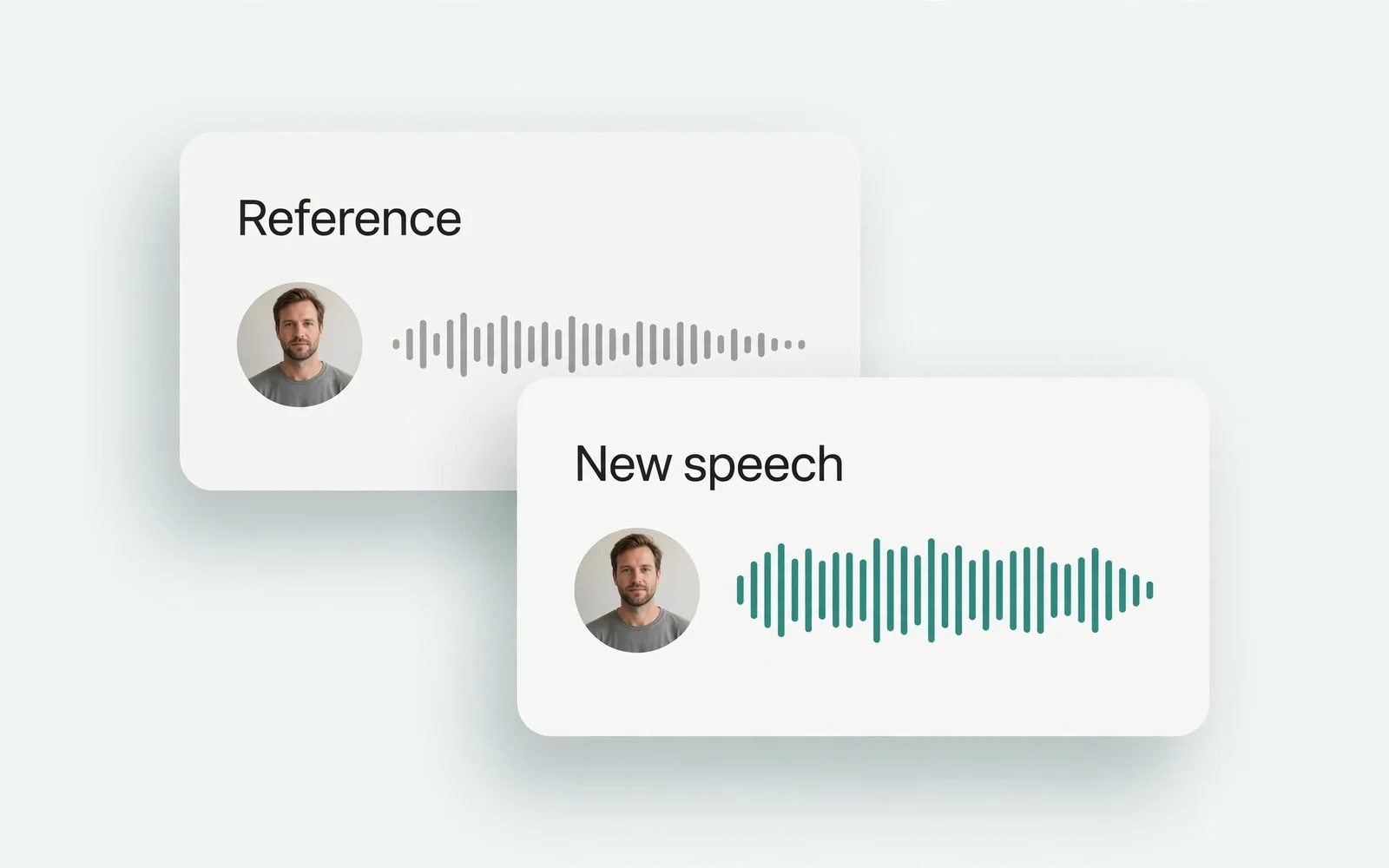
Does the translated audio keep the original speaker's voice?

Not in the current version. The pipeline transcribes your audio, translates the text, then generates new speech — so the output uses an AI voice rather than cloning the original speaker. If voice cloning becomes available, it will appear as an explicit option before you generate.

Which audio file formats can I upload?

You can choose MP3, WAV, M4A, AAC, OGG, or FLAC files in the current uploader.

Do failed jobs consume credits?

No. Credits are only deducted when a translation completes successfully. If a job fails, nothing is charged and you can retry for free.

More audio workflows

Continue with the recording or translation

Transcribe the recording first, convert its format, or turn an edited script into new narration.